
Co-developing research software and tools is rooted in Method-Driven Engineering: a framework where tool development is directly led by the methodological expertise of the digital methods researcher. I advocate for and am currently framing Method-Driven Engineering as a foundational approach to digital research. In this model, the researcher’s deep understanding of medium-technicity, platform logic, and web data infrastructures drives the technical architecture, ensuring that software serves as a rigorous instrument for visual and digital inquiry. By positioning the methodologist as the architect of the software, we ensure that the resulting tools are not just functional, but epistemologically rigorous and reproducible.
I have conceptualised and designed the methodological workflows for several research instruments that embody this approach:
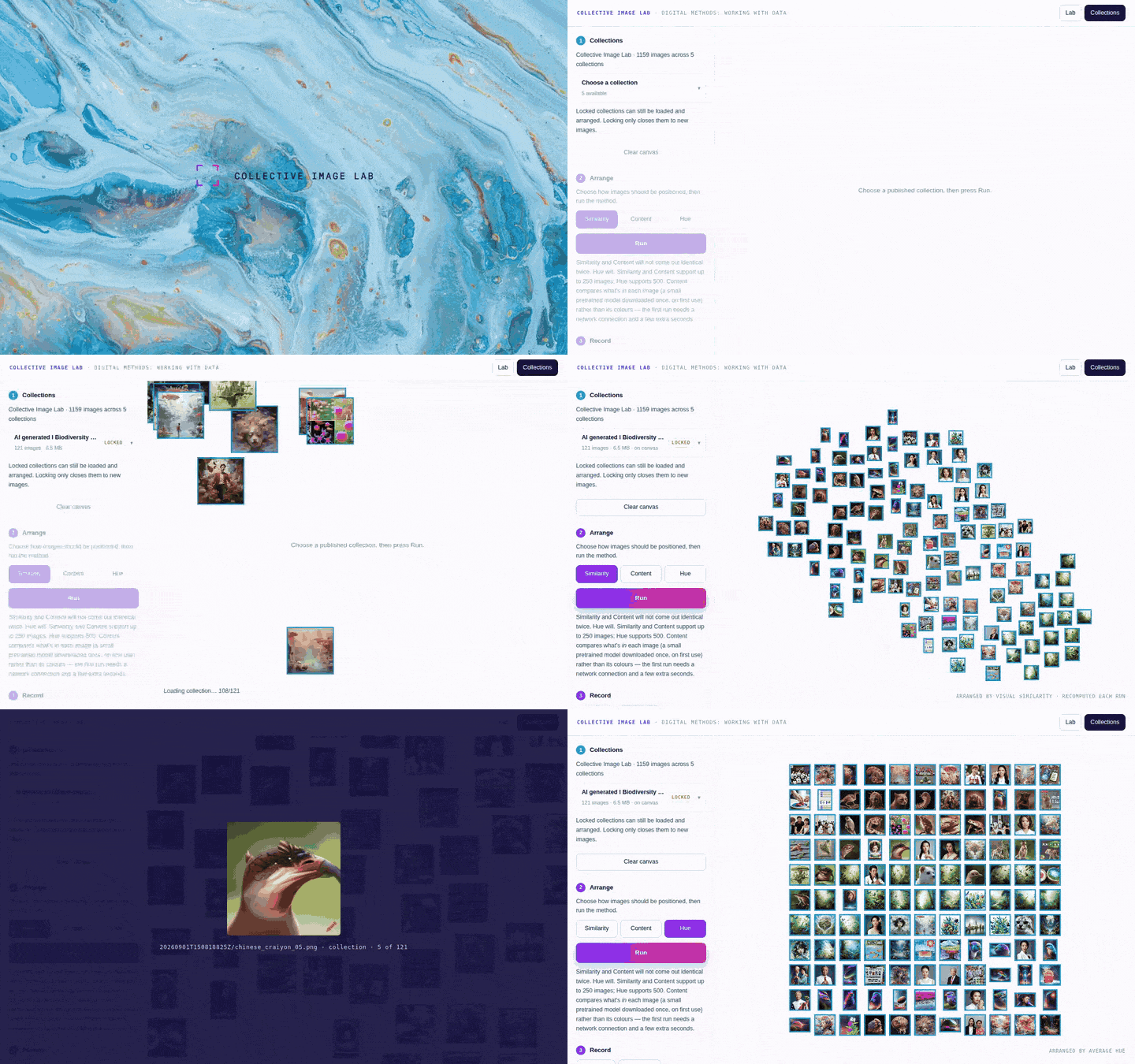
- Collective Image Lab (2026): is a lightweight tool for loading, arranging and exploring small image collections, developed through AI-assisted coding for research-led teaching in digital methods.
- The tool supports collective image curation and exploratory visual analysis, particularly for collections of around 250–500 images. Images can be organised through similarity-based spatialisation or colour, helping students and researchers examine patterns, clusters and relationships within visual datasets.
- Collective Image Lab is also an experiment in approaching AI as a medium for research tool-making, exploring how lightweight research software can be developed iteratively alongside methodological and pedagogical practice.
- Code and documentation: GitHub
- AI Source Scraper (2026): Building on my longitudinal research into AI search epistemologies (LSE Impact Blog, 2026), and comparative AI search studies (see Agentic AI on the Web) This tool automates the capture of how AI searches the web, transforming a longitudinal prompt method into a reproducible research infrastructure for auditing AI web search.
- Firefox Browser adds-on: https://addons.mozilla.org/en-US/firefox/addon/ai-source-scraper/
- Google Chrome extension: https://chromewebstore.google.com/detail/ai-source-scraper/mlnpekcdkedbaklnojjbjngaekadcdoa?hl=en
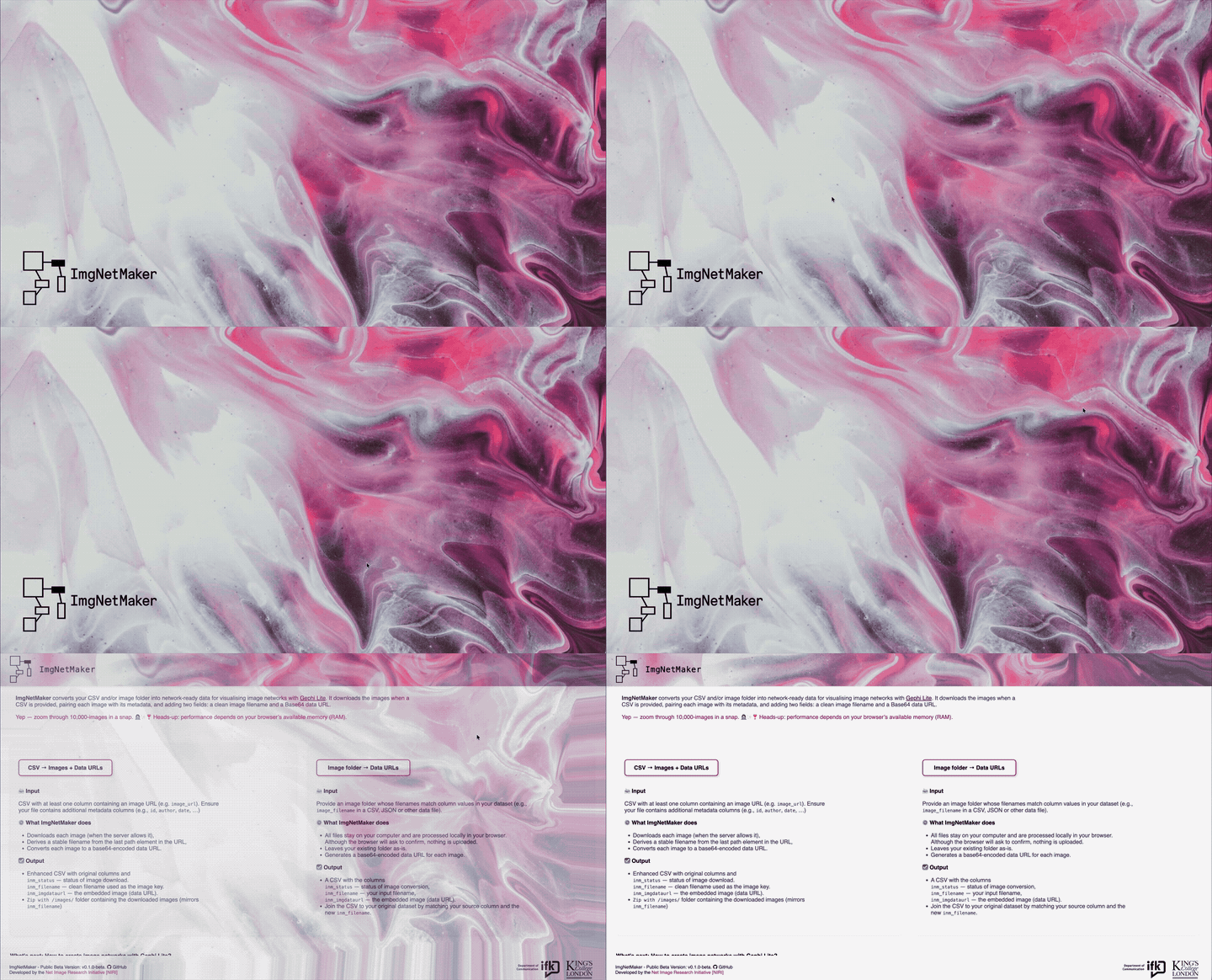
- ImgNetMaker (2025): I developed the conceptual framework and implementation method for this command-line tool, which facilitates the visual interpretation of image networks. It was conceptualised during my research fellowship at the University of Münster (Centre for Digitized Public Spheres Research) and implemented during Methods Café Week, with software development led by Jakob Jünger.
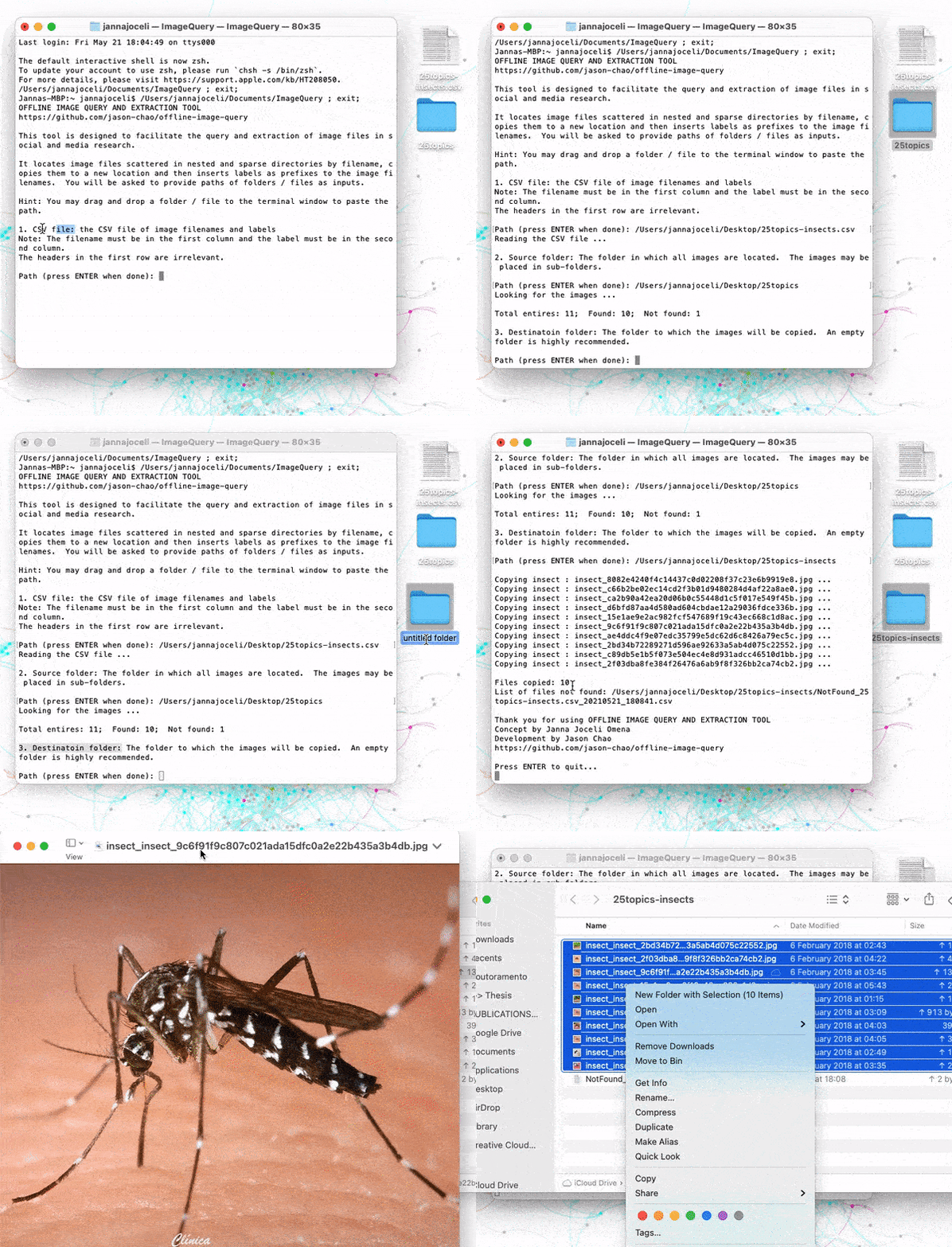
- Offline Image Query and Extraction Tool (2021): In collaboration with Jason Chao, I conceptualised this tool and its relevance in navigating sub-collections within image datasets.
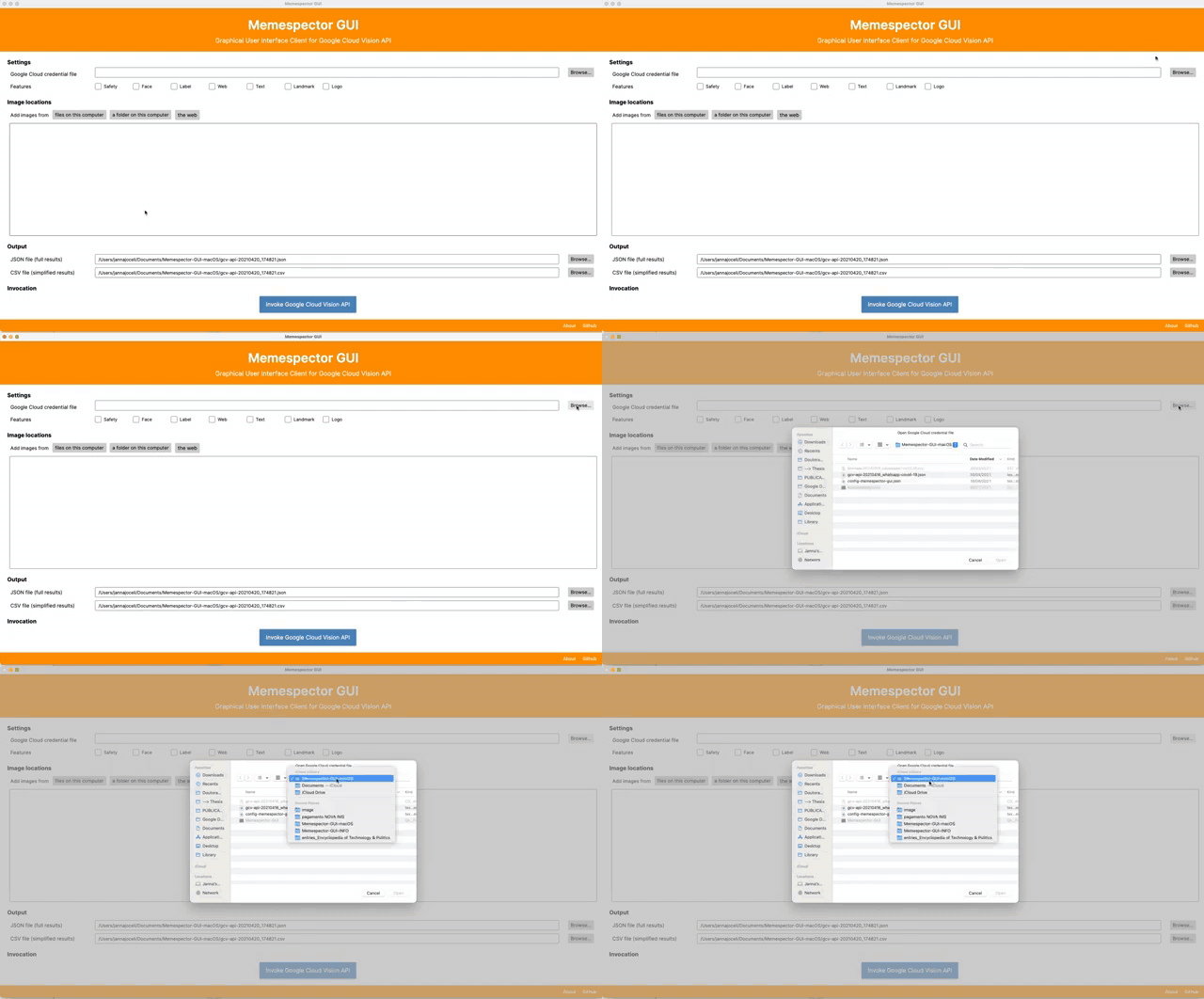
- Memespector GUI (2021): In collaboration with Jason Chao, I led the idea generation, tool usage design, and methodological application of this desktop interface for mediating AI Vision API requests, which facilitates AI-interpretation of image collections.
Collective Image Lab
How to cite: Omena, Janna Joceli. (2026). Collective Image Lab. https://jannajoceli.github.io/collective-image-lab/

ImgNetMaker
How to cite: Omena, J. J., & Jünger, J. (2025). ImgNetMaker (beta version) [Computer software]. GitHub. Conceptualised in the context of Omena’s 2025 research fellowship at the Centre for Digitized Public Spheres Research, University of Münster, and implemented during Methods Café Week, Münster.
Memespector GUI
A Graphical User Interface Client for Computer Vision APIs I Tutorial: https://bit.ly/DMI-tutorial_MemespectorGUI
Memespector-GUI is a cross-platform client for computer vision APIs with a graphical user interface. It supports Google Cloud Vision API, Microsoft Azure Cognitive Services, Clarifai Computer Vision and an API for Keras’ built-in open source models. Memespector-GUI runs on Windows, Mac OS and Linux.
How to cite: Chao, T. H. J. (2021). Memespector GUI: Graphical User Interface Client for Computer Vision APIs (Version 0.2) [Software]. Available from https://github.com/jason-chao/memespector-gui

Beyond tool architecture, I foster technical-methodological partnerships. While directing the SMART Data Sprint (2016-2023)—a pioneering Digital Methods school and sprint in Lisbon—I mediated a platinum sponsorship to support RAWGraphs development. This resulted in a custom version of the software created for the iNOVA Media Lab, used for teaching and research purposes.
iNOVA Media Lab RawGraphs 2.0 custom version
Beyond tool architecture, I foster technical-methodological partnerships. While directing the SMART Data Sprint (2016-2023)—a pioneering Digital Methods school and sprint in Lisbon—I mediated a platinum sponsorship to support RAWGraphs development. This resulted in a custom version of the software created for the iNOVA Media Lab, used for teaching and research purposes.
