From King’s College London to AoIR 2025
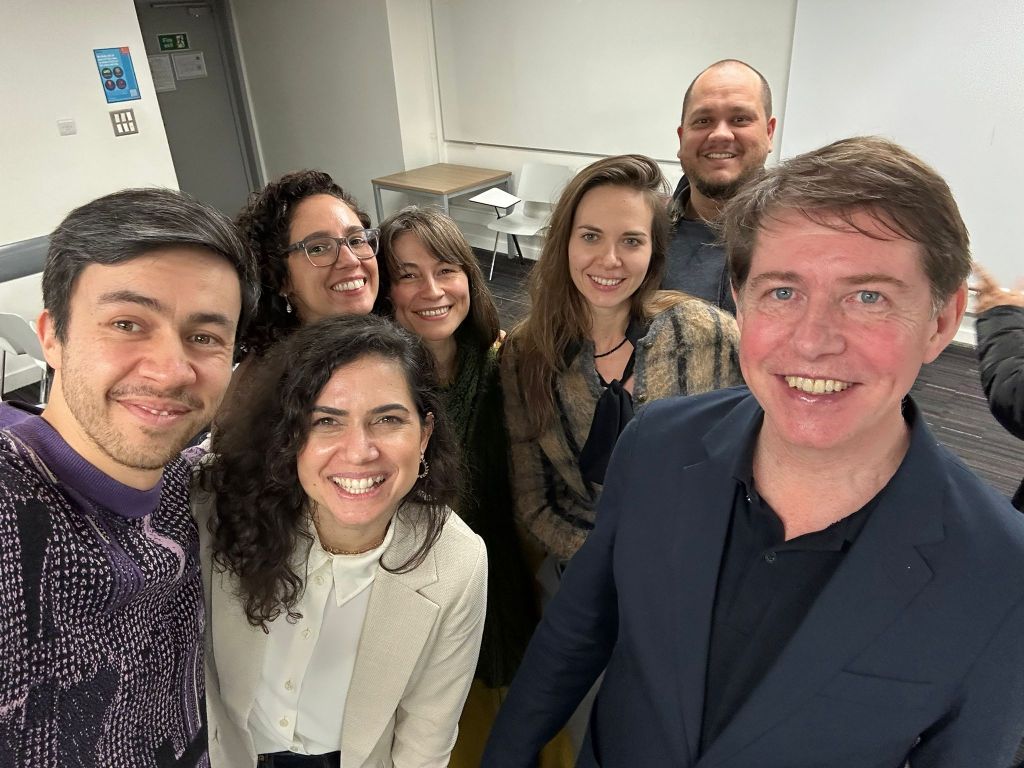
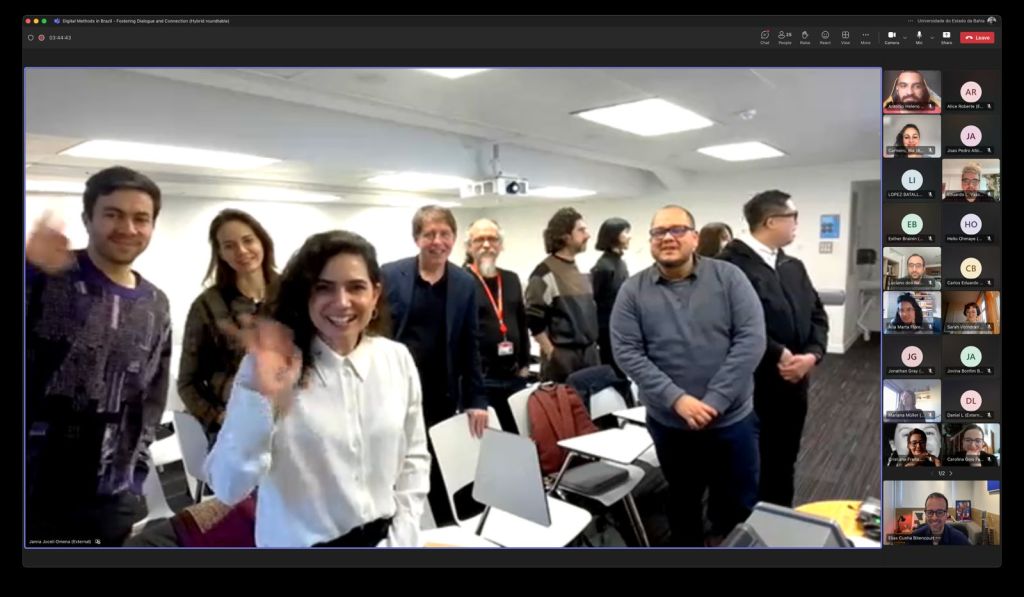
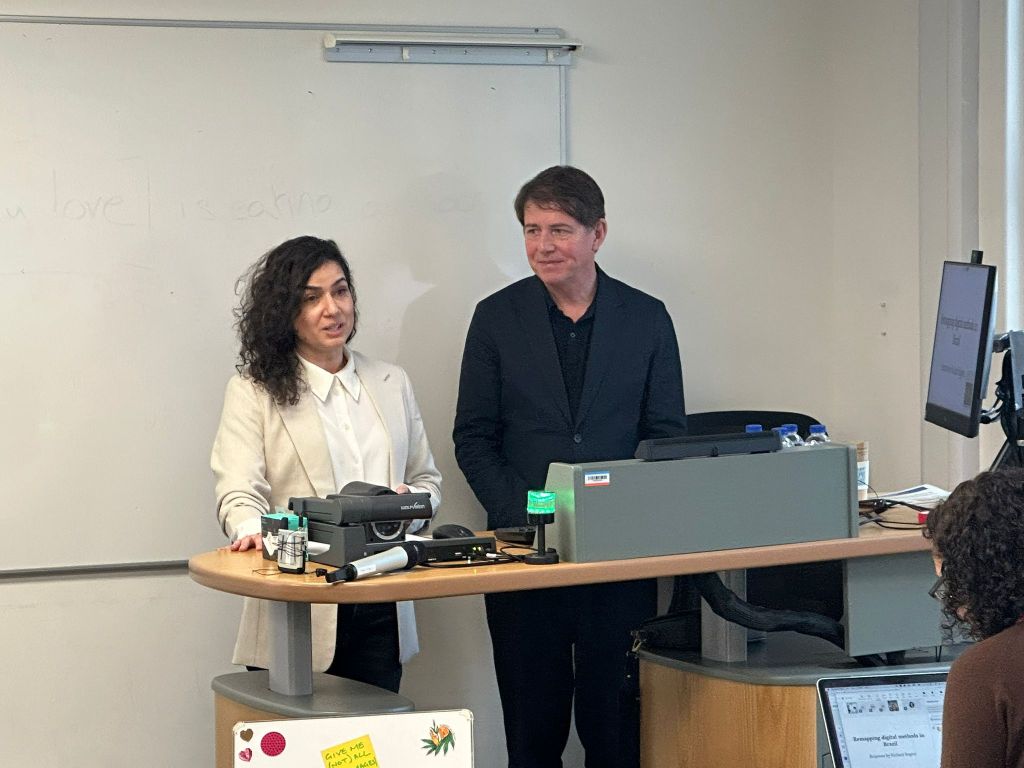
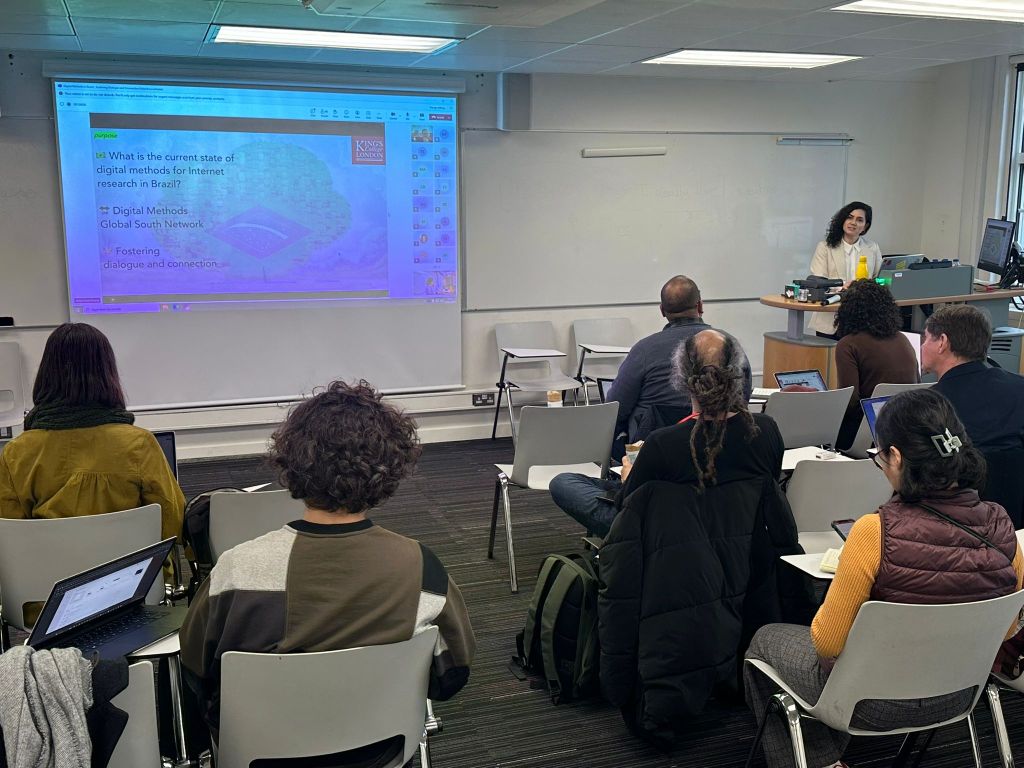
In my first year at King’s College London, I was especially pleased to lead an initiative that created space for international dialogue on digital methods in Brazil. Hosted by the Centre for Digital Culture, the roundtable “Digital Methods in Brazil” brought together colleagues to reflect on the current state of digital methods for Internet research in Brazil and to begin shaping a broader conversation around its future directions.
More than a standalone event, this roundtable was conceived as part of a larger effort to help articulate and connect an emerging field of debate. It sought to celebrate research practices being developed in and from Brazil, while also situating them within a wider methodological transition in which digital methods and methodologies are increasingly built with, in, and about AI, web platforms, and data visualisation. At the same time, it aimed to kick-start an international network of digital methods, particularly from a Global South perspective.
The session invited discussion around a central question: what is the current state of digital methods for Internet research in Brazil? In doing so, it opened space to think collectively about how Brazilian researchers have been developing, adapting, and contributing to digital methods, and what these contributions may offer to the field more broadly. I was delighted to organise this conversation with guest speakers Alan Angeluci, Elias Bitencourt, Giulia Tucci, and Richard Rogers.
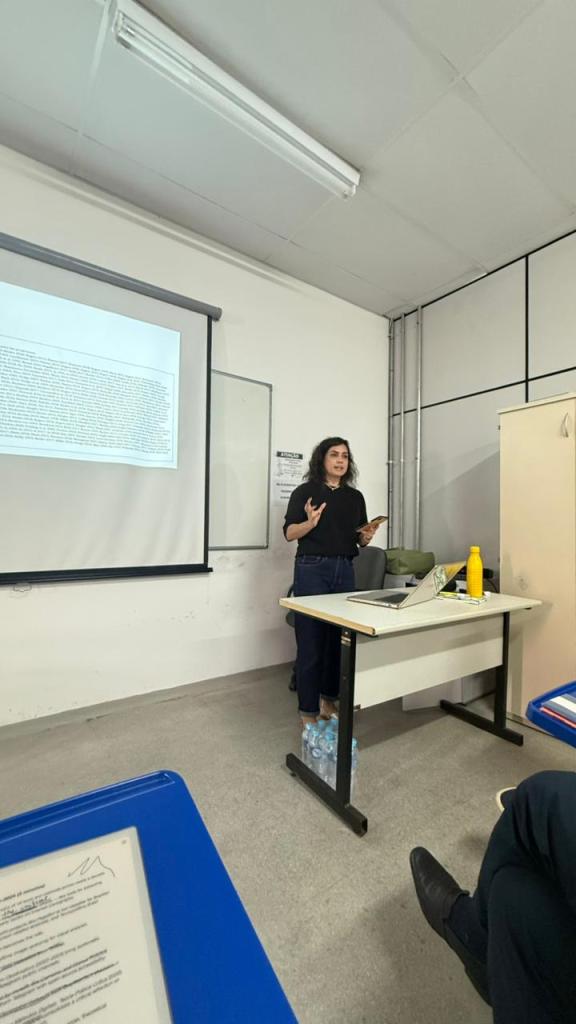
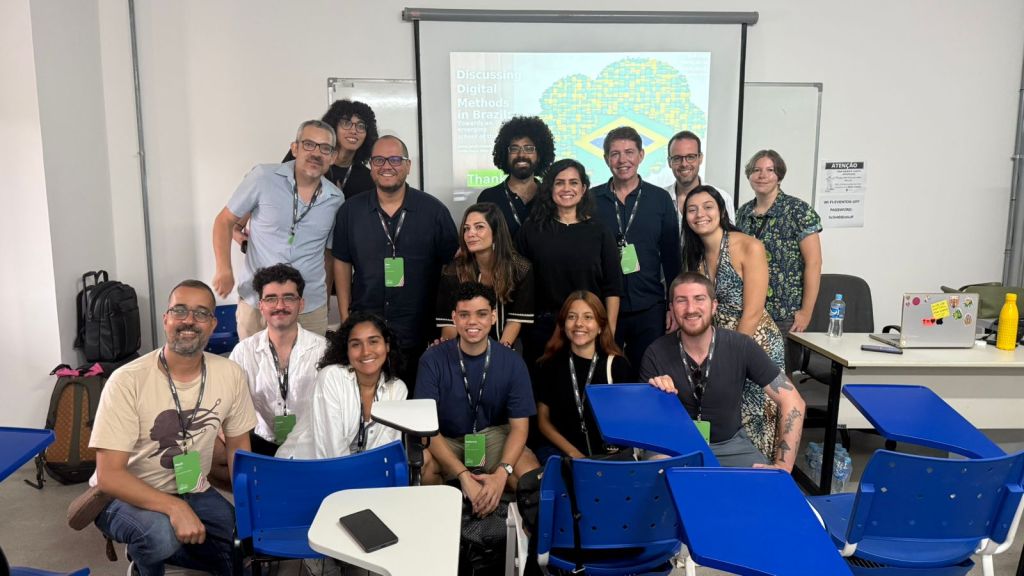
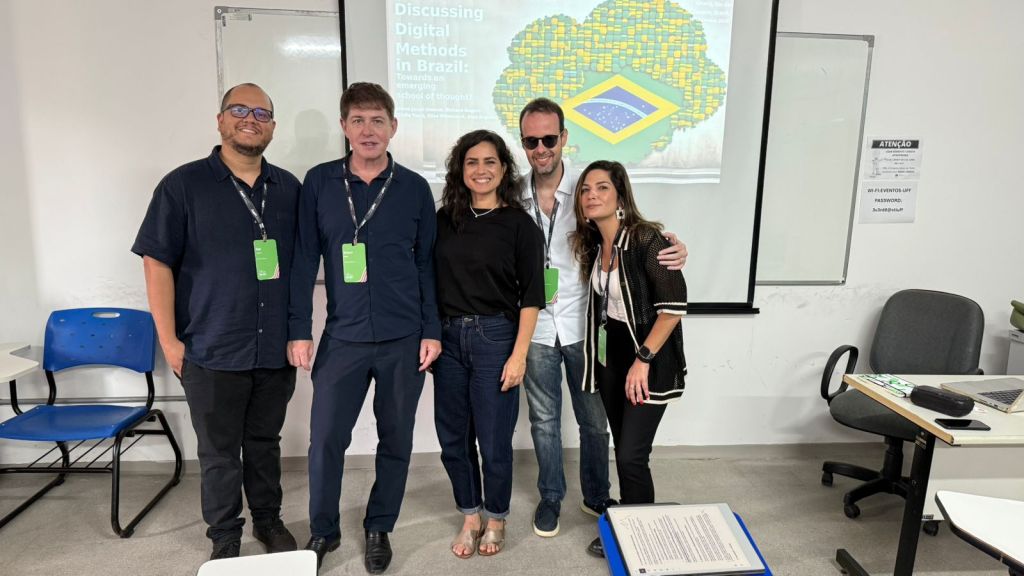
This initiative continued later in October 2025, at the Association of Internet Researchers (AoIR) Conference in Niterói, Rio de Janeiro, Brazil, with the roundtable “Discussing Digital Methods in Brazil: Towards an emerging school of thought?”. Bringing together Richard Rogers, Giulia Tucci, Elias Bitencourt, Alan Angeluci, and myself, the AoIR session expanded the discussion by reflecting on the current state and future directions of digital methods in Brazil.
Together, these two roundtables form part of an ongoing contribution to strengthening dialogue around digital methods in Brazil, both nationally and internationally. They also connect to a broader intellectual and methodological argument: that digital methods in Brazil can be understood not simply as scattered applications, but as part of an emerging school of thought shaped through conceptual reflection, methodological experimentation, bibliometric mapping, software development, and interdisciplinary collaboration.
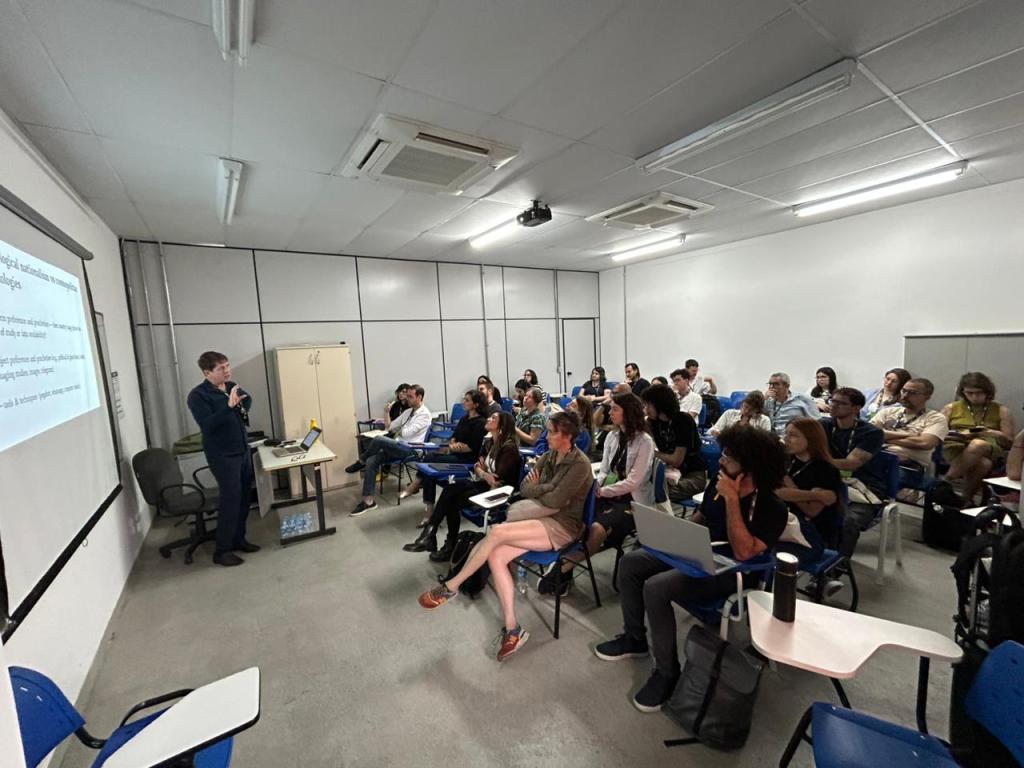
For me, this has been one meaningful way of contributing to the field of digital methods: not only by developing methods and concepts, but also by helping create the conditions for dialogue, exchange, and collective reflection. I am glad to have initiated this conversation at King’s, and equally glad to see it continue in international settings such as AoIR.
AoIR 2025, Roundtable Abstract
Discussing Digital Methods in Brazil: Towards an emerging school of thought?
Janna Joceli Omena1, Richard Rogers2, Giulia Tucci3,4, Elias Bitencourt5, Alan Angeluci6
1King’s College London; 2University of Amsterdam; 3Brazilian Institute of Information in Science and Technology (IBICT); 4Federal University of Rio de Janeiro (UFRJ); 5State University of Bahia (UNEB); 6University of São Paulo (ECA/USP)
In the context of methodological transitions that integrate specific worldviews with the Internet, emerging schools of thought—such as cultural analytics and computational social sciences—are shaping new rationales for methodological development. Since 2013, an increasing number of Brazilian researchers in Communication, Information, and Applied Social Sciences have contributed to both national and cosmopolitan methodologies through the so-called ‘digital methods’. This roundtable explores the current state of digital methods in Brazil, critically reflecting on future challenges in digital traces research, which, to some extent, mirrors the work mapped so far. First, we situate digital methods as a distinct research practice that seriously engages with the knowledge mobilised by computational media and digital objects within research methods. Terms like online groundedness, medium repurposing, and medium-technicity play a key role here. Following that, we critically examine how Brazilian digital research agendas and frameworks converge with—or (dis)connect from—digital methods. Second, we present quantitative and qualitative research findings that map Brazilian publications adopting ‘métodos digitais’ (a bibliometric study) and provide a brief history of software development to advance these methods. Third, as a response to parts one and two, we propose a remapping of digital methods in Brazil by examining current methodological nationalism—such as bot and WhatsApp studies—alongside cosmopolitan methodologies, like image analysis, and their contributions to the field of digital methods. We reflect on what can be particularly productive (considering both advantages and disadvantages) in broad approaches (necessity of the digital) and narrow ones (emphasising online groundedness, medium-technicity, medium repurposing, and platform affordances) within digital methods. Finally, we invite the roundtable audience to engage in a collective discussion on the future challenges of digital methods and how to move forward.
 Janna Joceli Omena
Leave a comment