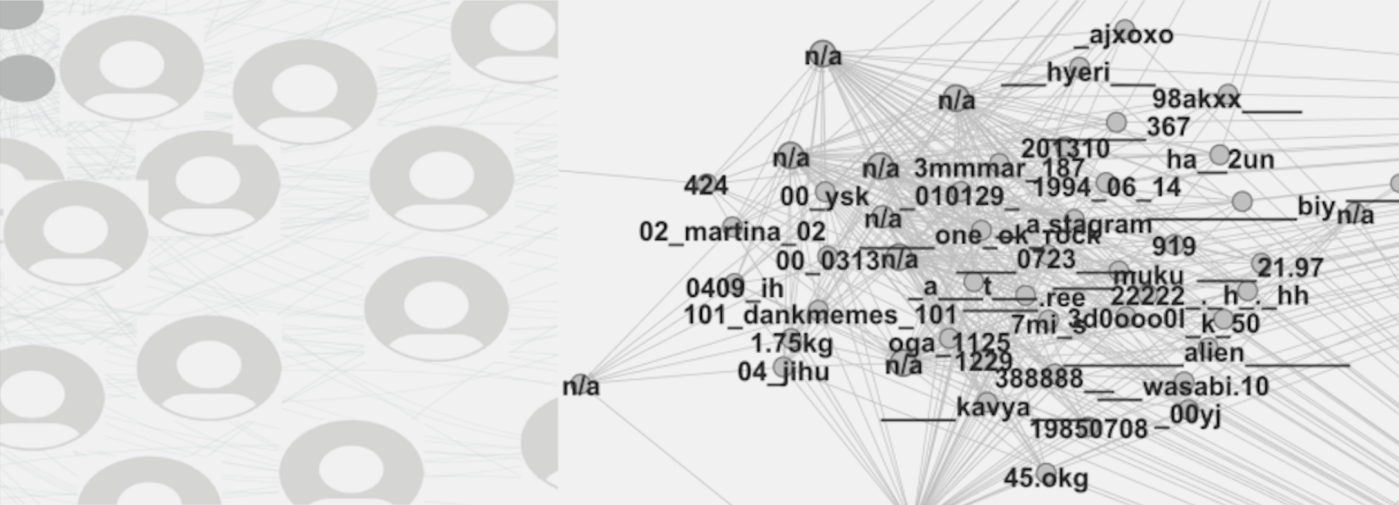
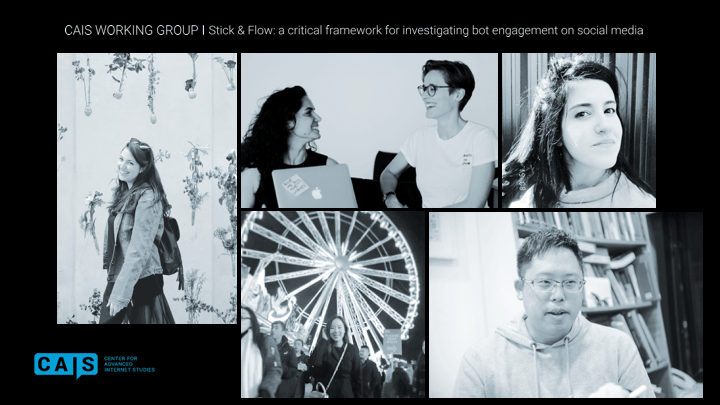
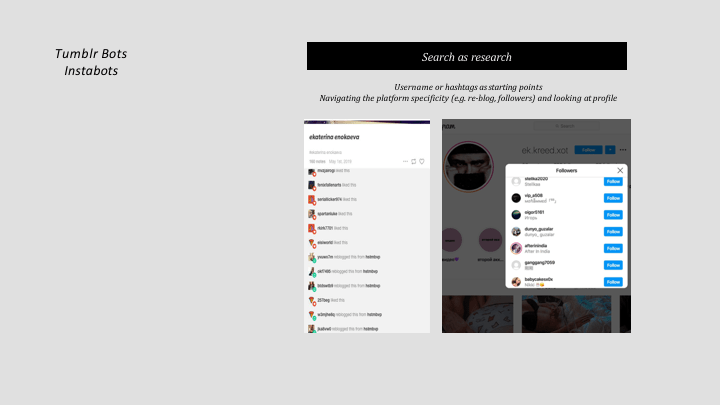
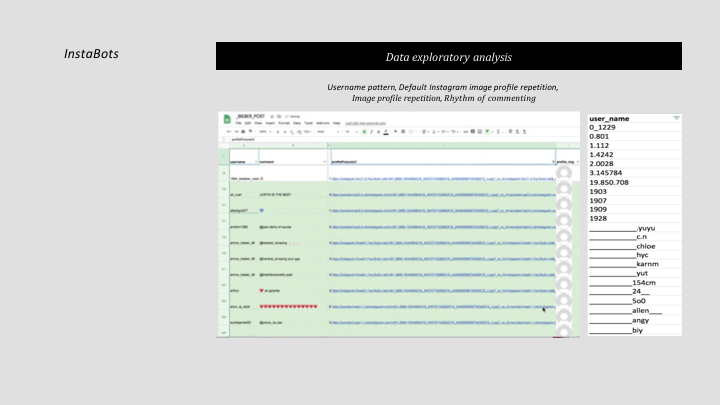
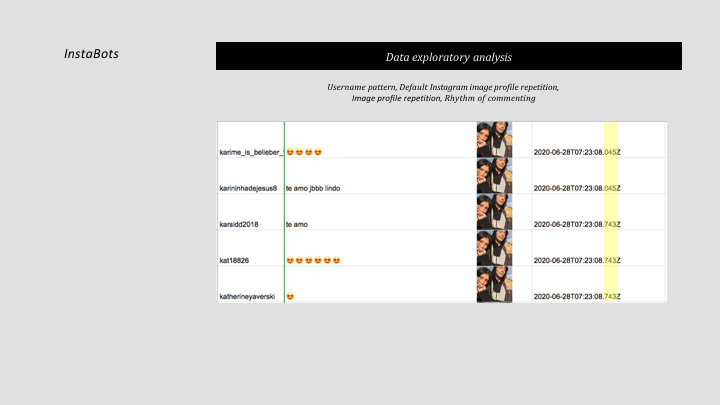
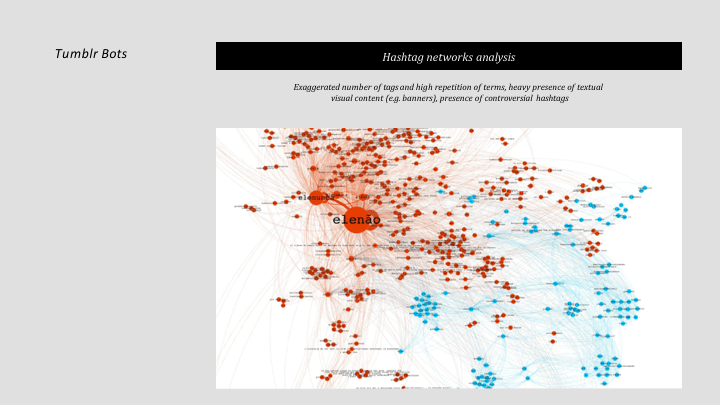
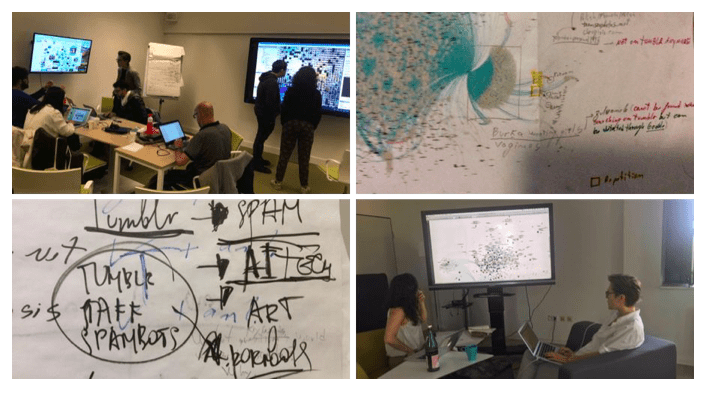
The working group Stick&Flow is a collaborative initiative to create innovative digital visual methods and methodologies for studying bot engagement on Instagram and Tumblr. The project is funded by CAIS – Center for Advanced Internet Studies, and it was officially presented this week (26 August, 2020) by myself and Elena Pilipets (Alpen-Adria Universität Klagenfurt, Austria) at CAIS Colloquium. We are a total of six researchers fascinated with the life of bots: Jason Chao (University of Warwick/Universität Siegen, England/Germany), Mengying Li (Journalism School, Fudan University, Shanghai), Ana Marta M. Flores (Universidade Nova de Lisboa/iNOVA Media Lab, Portugal) and Alessia Musio (Politecnico di Milano/Density Design Lab, Italy).
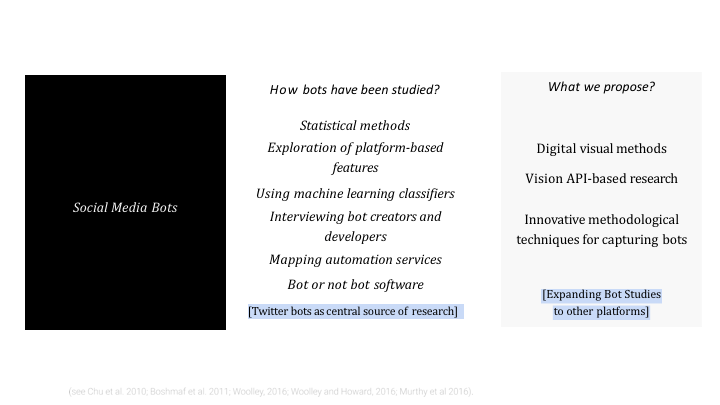
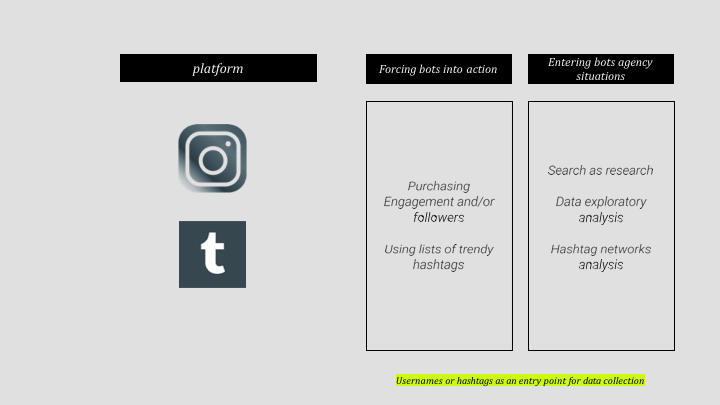
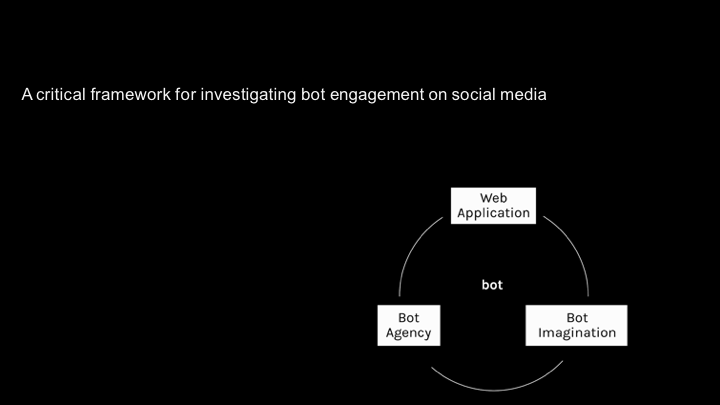
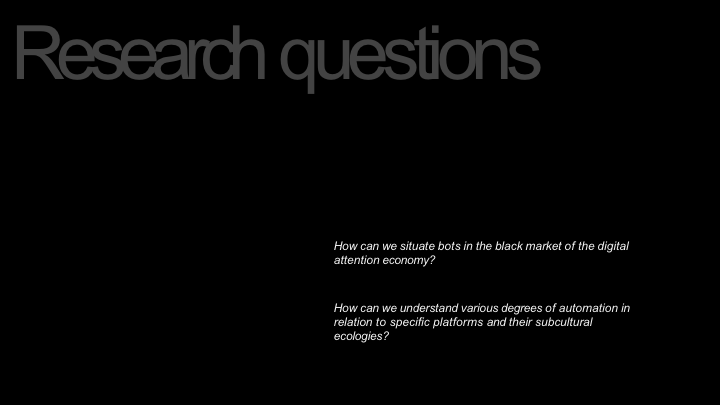
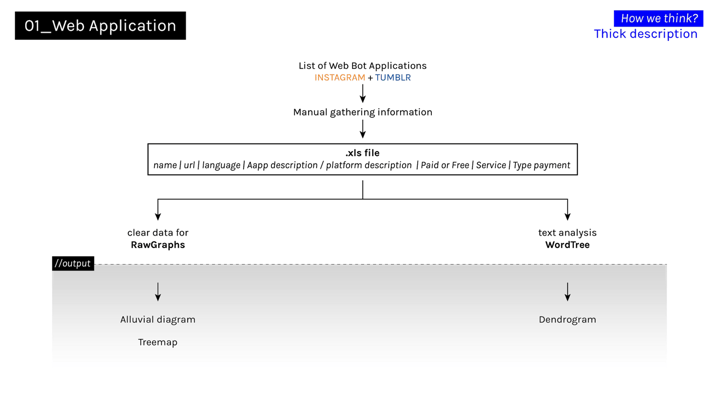
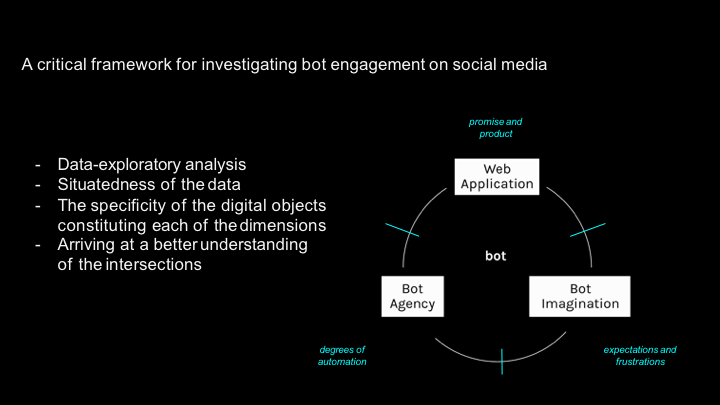
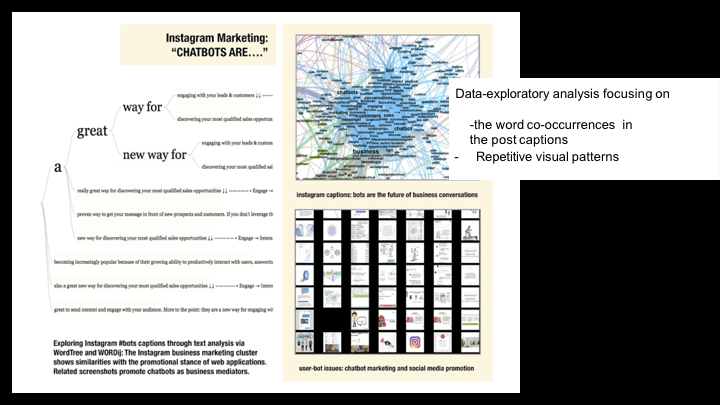
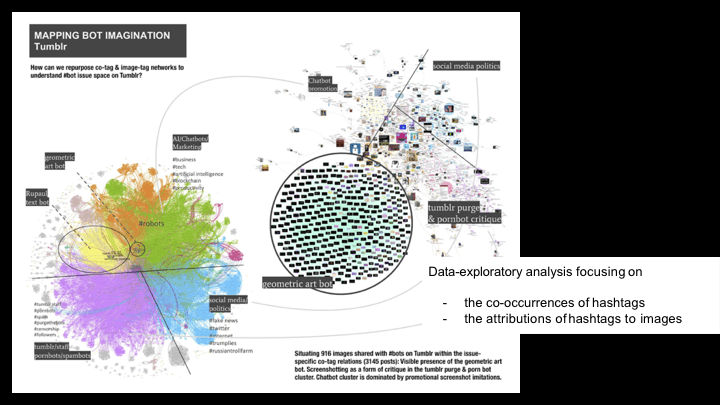
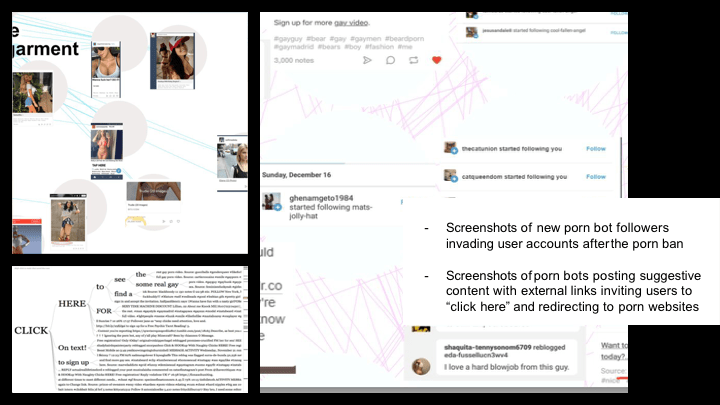
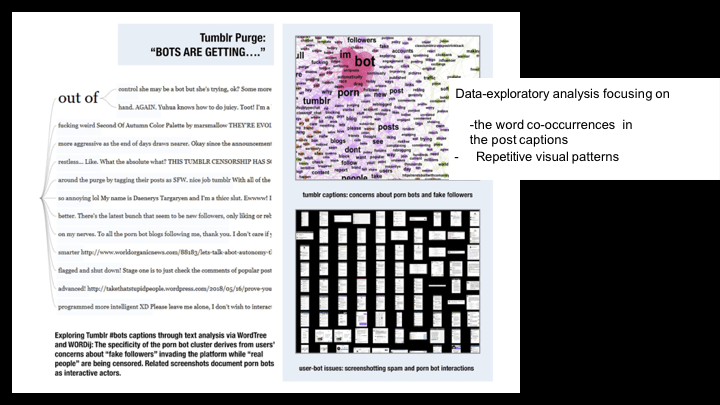
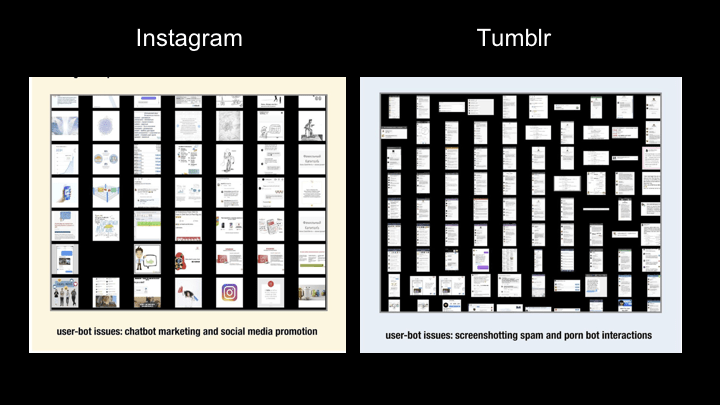
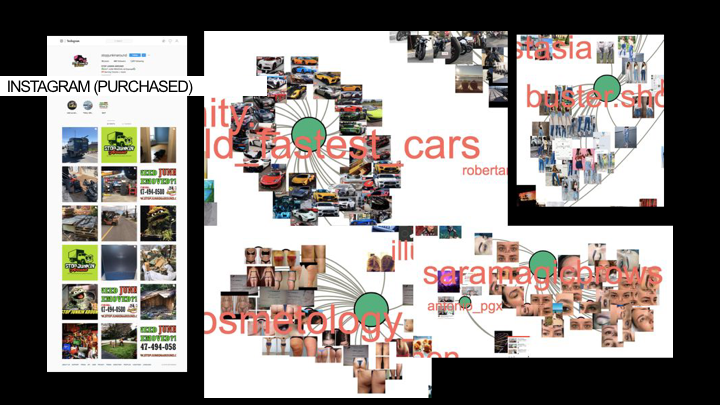
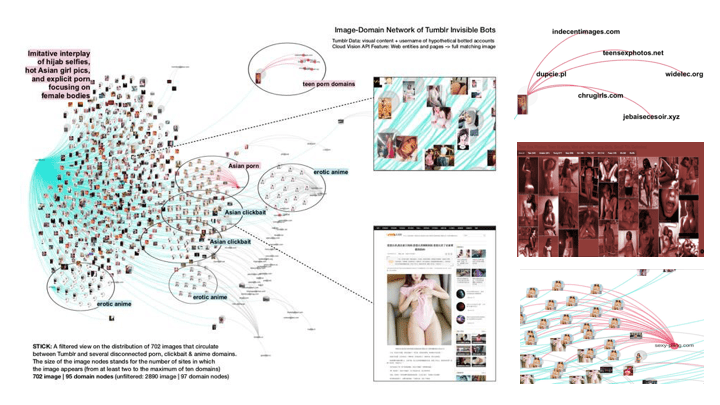
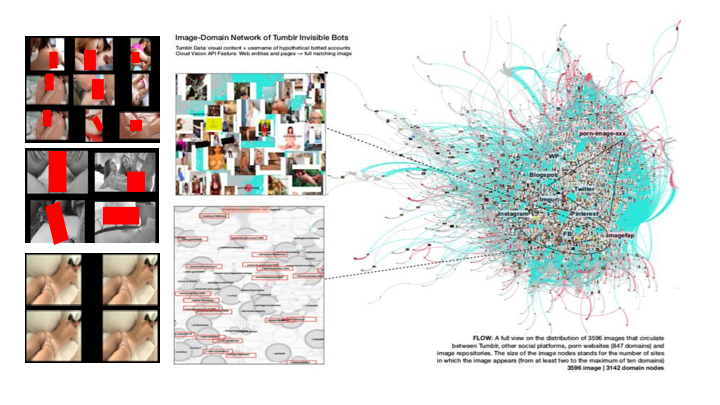
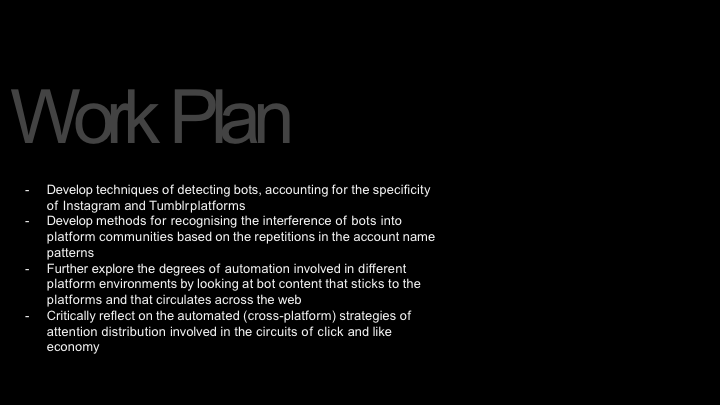
This research group studies the phenomenon of automated engagement on Instagram and Tumblr as an ensemble of software affordances, human interests and techniques of mediation. Using digital methods, media theory and internet ethnography, we argue that the study of social bots should consider three interconnected dimensions:
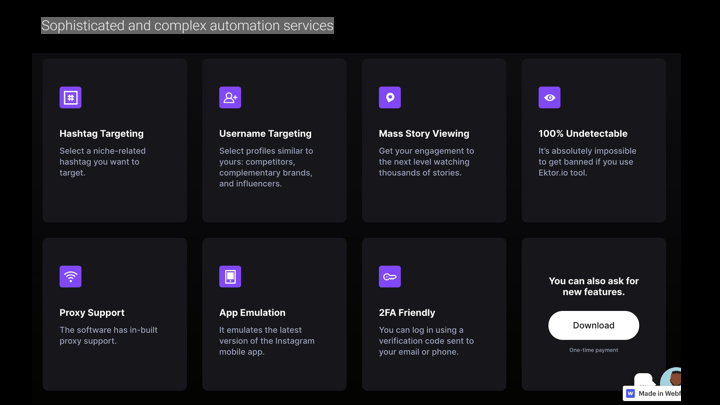
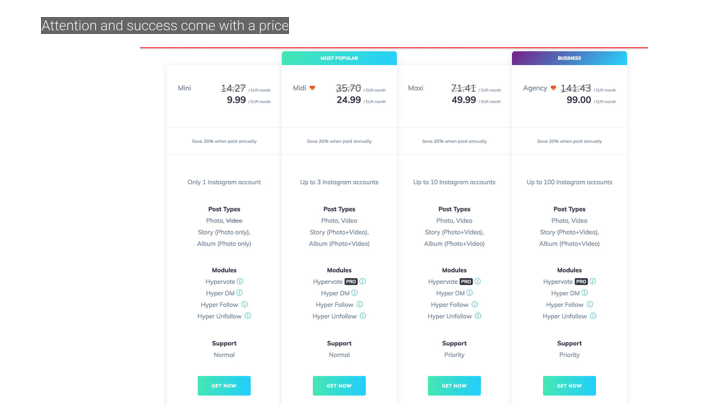
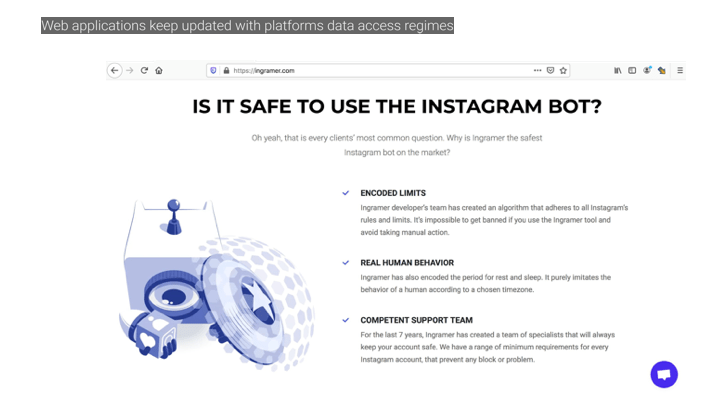
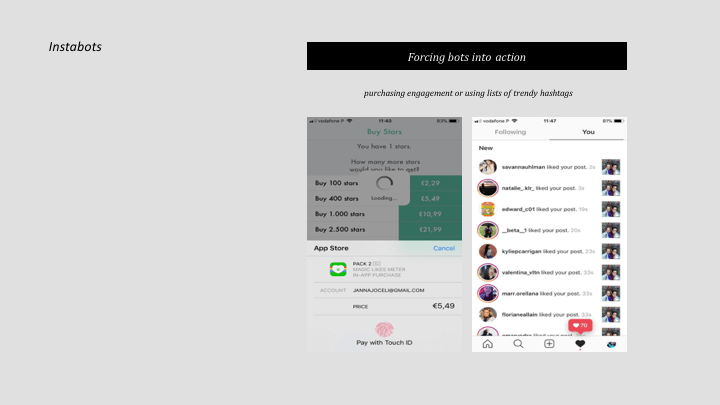
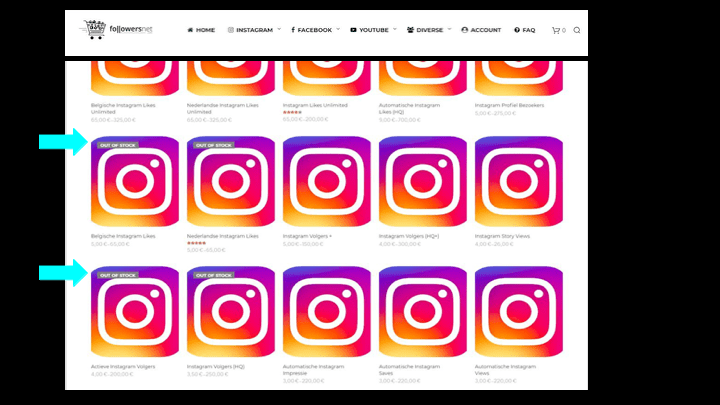
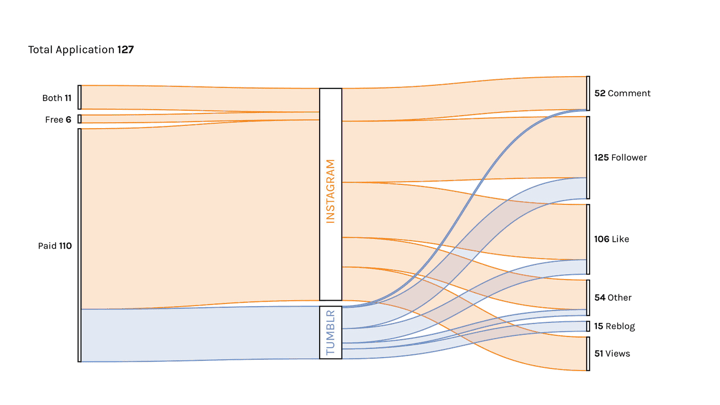
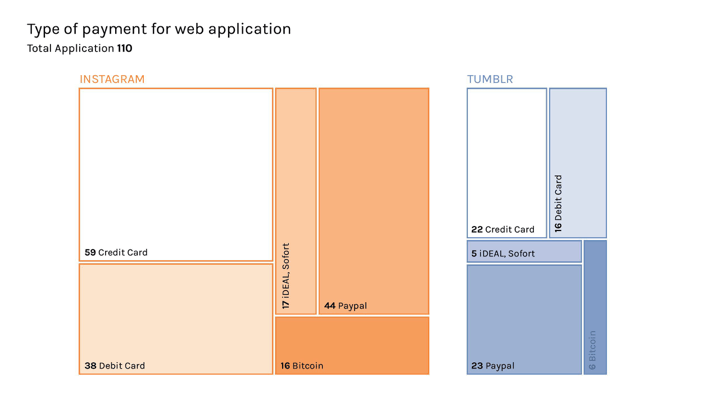
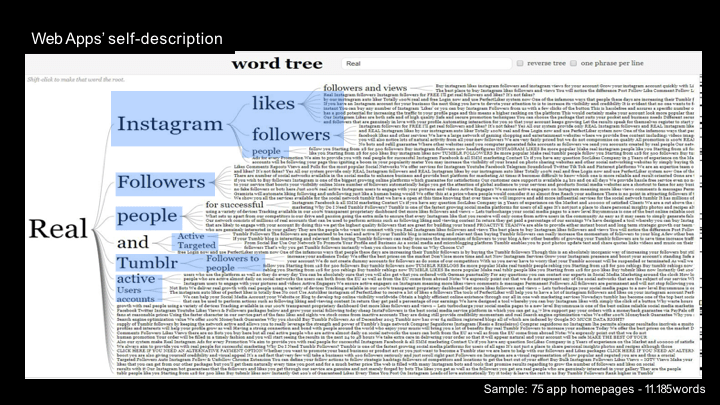
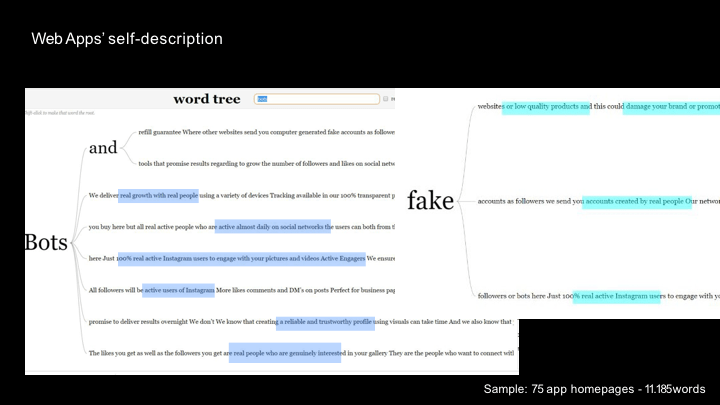
- the role of web or mobile applications,
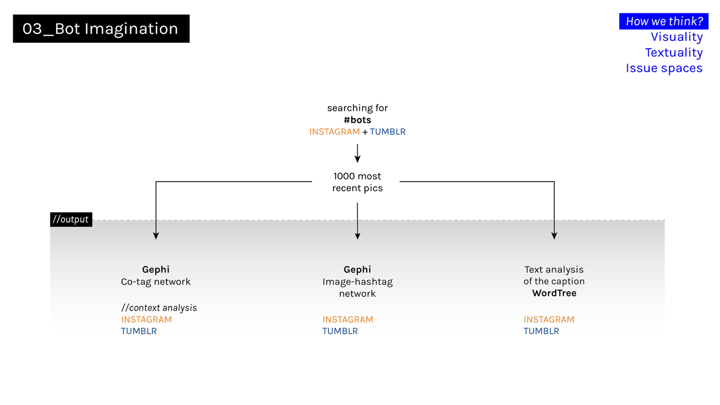
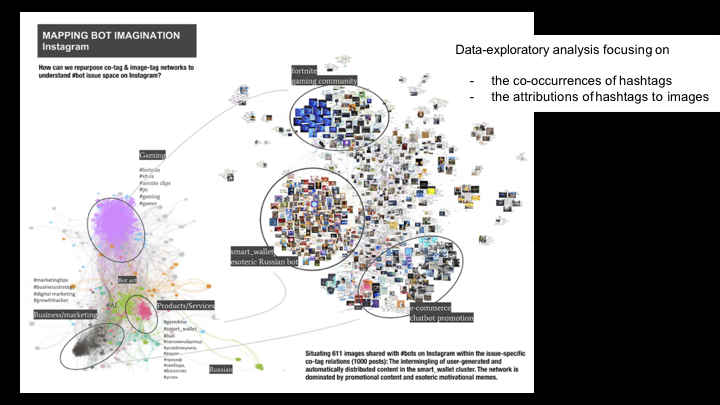
- the shifts in societal concerns around bot ‘imagination’ or how users relate to #bots through tagging practices, and finally
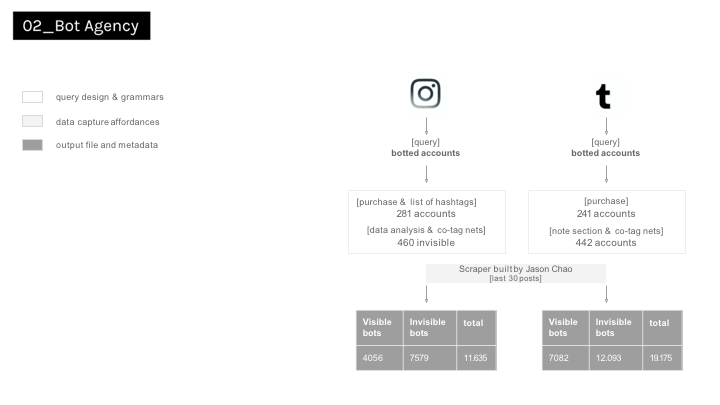
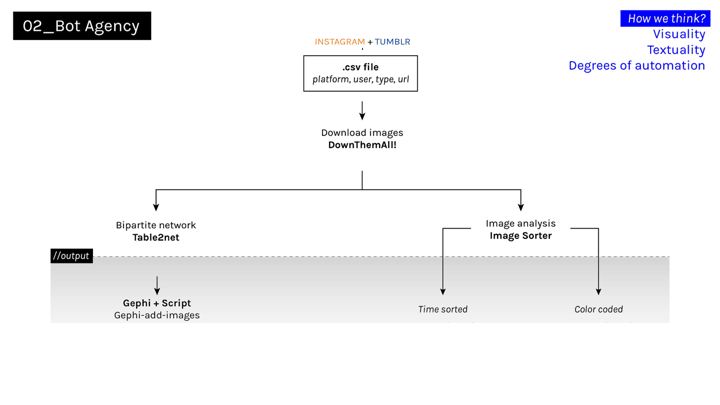
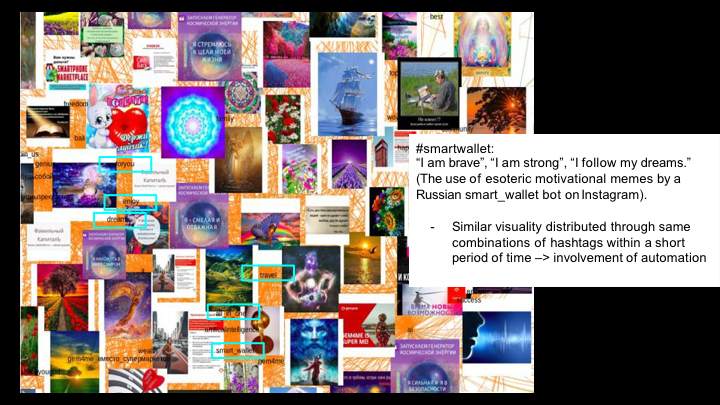
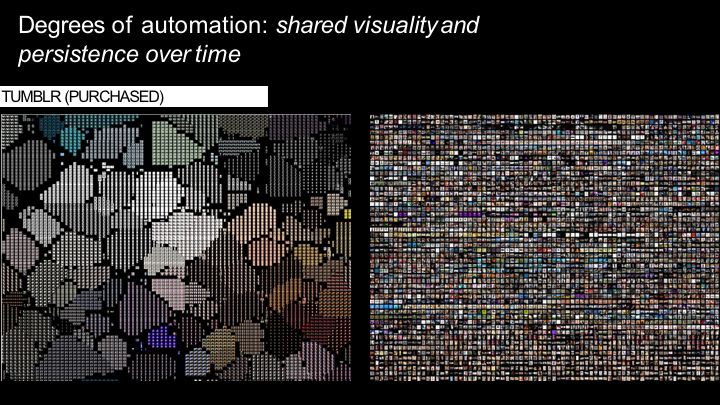
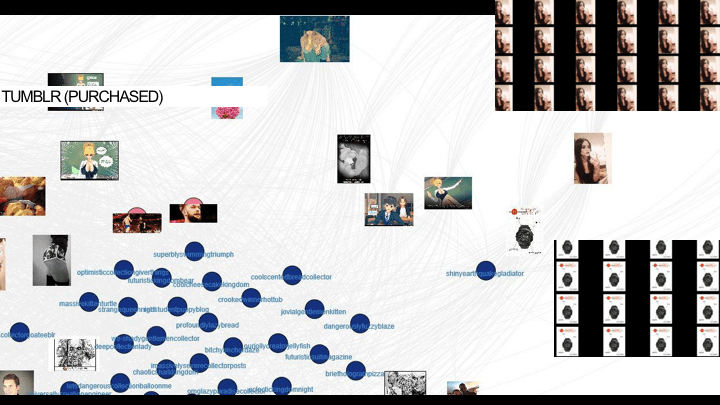
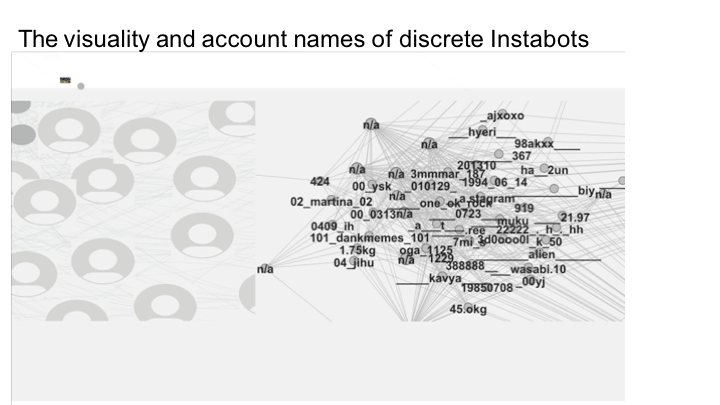
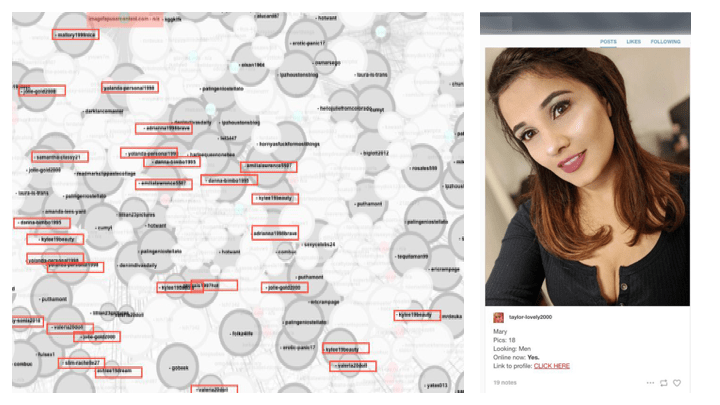
- bot agency or what we can learn from detecting and studying visual and textual content provided by social bot accounts.
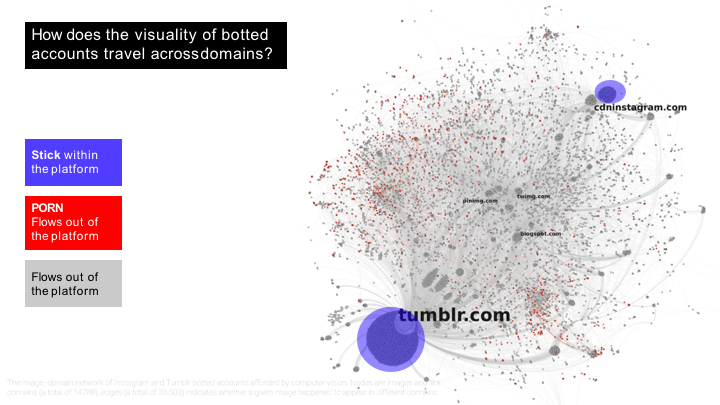
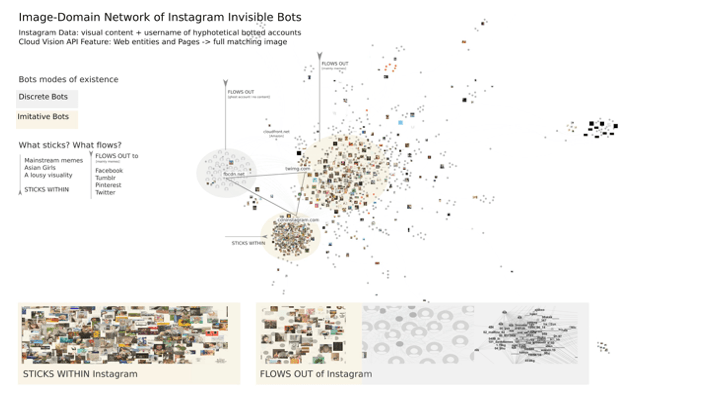
In order to account for implications and challenges of social automation for the understanding of digital society, we propose a network perspective on the ephemeral dynamics of “stick and flow” that constitute the ways in which bots operate on social media platforms and beyond.


Other posts related with social media bots:
[2019] Reading Digital Networks: Climate Emergency, Bolsonaro & Bot Image Circulation by Vision API.
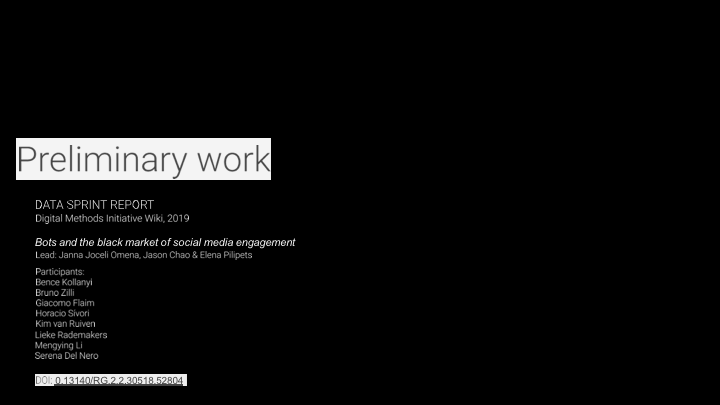
[2017] Insta Bots and the black market of social media engagement

 Janna Joceli Omena
Leave a comment